
 Beginning the adoption home study process can feel overwhelming, especially when you’re unsure what to expect. At its core, though, the home study isn’t about judging your worth as a parent — it’s about preparing you for a successful adoption while ensuring the best possible outcome for a child.
This step is designed to educate, guide, and support you as you move forward. By understanding what the adoption home study involves and how to prepare, you can replace uncertainty with confidence and approach this important milestone feeling informed, encouraged, and ready for what’s ahead.
You can ease your anxiety and prevent delays in the adoption process by preparing for the adoption home study. Understanding the home study process will help you enter this phase of your adoption journey with confidence.
Table of Contents
- What’s an Adoption Home Study?
- Adoption Home Study Checklist
- How to Avoid Delays
- Background Checks
- Interviews with a Social Worker
- Your Home Visit Checklist
- Webinar: Behind the Scenes of Your Adoption Home Study
- Your Dog and the Adoption Home Study
- The Home Study Report
What’s an Adoption Home Study?
Every state requires prospective adoptive families to participate in an adoption home study to confirm that adoptions are being conducted legally and responsibly. The adoption home study process exists to assess your ability to be a parent. The home study provider is a social worker who is there to help get you ready for adoptive parenting and to equip you for success.
The process is about more than just ensuring that you are qualified to bring a child into your home. The adoption home study allows the social worker and your adoption professionals to get to know you. This information is the key to helping a birth mother find and choose you as the perfect match for her baby.
Adoption Home Study Checklist and Requirements
Lifetime Adoption has created an adoption home study checklist to help adoptive parents based on our most common questions about home studies.
“How deep will they dig into our lives?”, “Do we have to organize every closet and dust every corner?”, “Can we get a home study if we rent our home?” and “Is there any reason we wouldn’t be approved?” are just a few of the frequently asked questions about adoption home studies.
Here are the essential items you will need to provide:
- ID – such as a driver’s license
- Proof of residency
- Birth certificates for all adults and children in the home
- Marriage license
- Divorce Decrees
- Death Certificate of a former spouse
- Proof of Military Discharge
- Background checks (FBI, State, Local, Abuse, Sex offender) for every state lived in for the past five years
- Relative references
- Non-relative references
- Employment references
- School references for children in the home
- Financial statement
- Your tax returns for the past three years
- Proof of medical insurance, including documentation that you can add an adopted child
- Savings statement
- Guardianship statement – who is named and accepts responsibility in the event something happens to the parents
- Physicals on adoptive parents and all children in the home
- Pet vaccination verification
- Complete state application to adopt
- Adoption disclosure
- Release of information
- Confirmation of completion of mandatory training hours
- Adoptive family questionnaire (very detailed historical and current information about the family)
Other forms to sign and acknowledge depending on state requirements – such as:
- Acknowledgment of Firearms safety requirements
- Sudden Infant Death Syndrome Information
- Water Safety
You will also have:
- Interviews with all family members
- Inspection of the home

Gather the Essential Documents
The initial phase of the adoption home study will be paperwork. Your adoption professional will set you up with the home study application and the licensed professional who will conduct the adoption home study. Once you have completed the adoption home study application, work on gathering the following documents:
- ID (such as a driver’s license or passport)
- Birth certificate
- Marriage certificate
- Proof of employment and income
- Proof of insurance
- Financial records
- Medical records
- Documentation of a recent physical with your doctor
| Category | Documents Required |
|---|---|
| Identity Verification |
• Driver’s License • Birth Certificate (you and your children) • Marriage License (if applicable) • Divorce Decrees (if applicable) • Death Certificate of Former Spouse (if applicable) • Proof of Military Discharge (if applicable) • References:
|
| Background Checks |
• FBI Level 2 Background Check • State Background Check • Local Background Check • Child Abuse Background Check • Sex Abuse Registry Check • (Some states also require 911 call records and civil background checks) |
| Financial Stability |
• 3 Years of IRS Tax Returns • 3 Months of Bank Statements • Documentation of Savings, IRA, or Other Income • Completed Financial Statement • Guardianship Statement (backup plan for child) • Proof of Insurance |
| Employment Verification | • Employment Reference Letter (directly from employer) |
| Medical Verification |
• Physician Report for All Household Members • Statement of Physical Health • Pet Vaccination Records |
| State-Required Forms |
• Adoption Application • Disclosure Forms • Release Forms • Personal History Questionnaire • Confirmation of Educational Requirements • Additional State-Specific Documentation |
How to Avoid Delays
When working on your home study process, we recommend asking your provider for a complete list of all the documents you need to provide. This way, you can prioritize the ones that may take longer to obtain and start on them early. Getting a head start on these documents can help you stay ahead of the game and ensure your home study process goes smoothly.
During the home study process, it’s common for providers to require a signed physician’s statement regarding your health, as well as fingerprinting by an authorized authority. If you have pets, it’s important to schedule vet appointments to ensure they are up to date on all vaccinations. Taking care of these requirements ahead of time can help streamline the home study process and ensure that everything goes smoothly.
All in all, your home study process will progress at the rate you turn in the necessary items to your provider. The quicker you can get everything turned in, the smoother it will go. It’s a good idea to ask a potential provider about their turnaround time once they have everything they need.
Background Checks
Each state requires prospective adoptive parents to participate in a background check. Depending on your state’s specific requirements, this may include:
- Federal, state, and local criminal records
- Child abuse records
- Fingerprints
Be honest about any criminal activity in your past. Depending on the circumstance, your adoption professional may still be able to work with you.

Interviews with a Social Worker
Look at your interviews as a way to build a relationship with the social worker. The social worker is there to educate you about the adoption process and prepare you for the next steps.
One purpose of the interviews is to document your social history, your story, and what led you to choose adoption. You will likely discuss your background and family, your experiences with children, your parenting philosophy, how you handle stress, and what age child will best fit your family. Be authentic. No one is expecting perfection. Honesty is the key to making a successful match.
If children (adoptive or biological) are already a part of your family, they will also be involved in the home study. The social worker may ask about school, their friends, and their interests. They may invite older children to participate in a group session to share their feelings about having a sibling. The social worker wants to ensure the entire family is ready to welcome a new child into their home.
Your Home Visit Checklist
For many hopeful adoptive parents, the home visit can be the most intimidating part of the adoption home study. However, it won’t be a critique of your housekeeping skills. The social worker is more concerned with your home being a safe, comfortable environment for a child.
Use a childproofing checklist like the one below to address any potential hazards before your home study:
- Store toxic cleaners out of reach and behind a childproof lock.
- Tie up dangling cords on drapes and blinds.
- Test your smoke detectors and carbon monoxide detectors to ensure they work properly.
- Safely store firearms in a locked location.
- Install safety gates, a fireplace grill, and outlet covers to protect young children.
- The yard should be safe, and any decks or pools should be fenced according to code.
- Create a plan for where your child will sleep and play.
Webinar: Behind the Scenes of Your Adoption Home Study
In this adoption webinar exclusive to Lifetime, we discuss all things home study. Get expert answers from one of Lifetime’s directors, Linda Rotz, who is also an experienced home study professional. In the webinar, you’ll get to go behind the scenes of the adoption home study so that you can prepare for what to expect, both before AND after you bring your baby home.
Moving beyond the basics about your home study, Linda helped us get a deeper look at what’s involved and how your home study writer works as a partner in your adoption. In this webinar, we:
- Answered many questions from hopeful adoptive parents in the audience
- Shared a few tips for staying on task and keeping perspective while you complete your home study
- Discussed some do’s and don’ts that have helped (or hurt) other adoptive parents where their home study is concerned
Your Dog and the Adoption Home Study
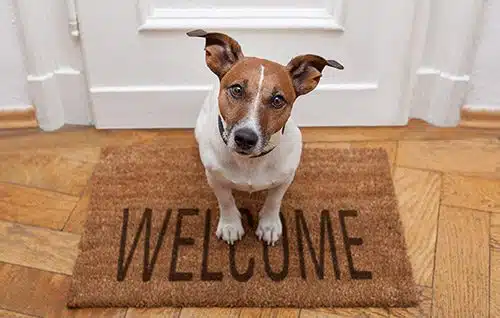
We’ve helped many families with concerns that their dogs could thwart the home study process. A rambunctious pair of dogs shouldn’t hinder you. However, I would definitely have concerns if the dogs exhibit aggressive behavior, such as snapping or growling, and you cannot subdue them. A home study provider is required to meet all pets.
Dogs shouldn’t pose a problem for your home study as long as they’ve been vaccinated and are well-socialized. Depending on the adoption laws in your state, you may be required to include a certificate of vaccination with your home study paperwork.
We’ve never seen a family not pass a home study due to pet behavior, and we are happy to share some ideas with you!
Dog Training and Socialization
In the days leading up to the scheduled home visit, it is helpful to begin desensitizing the dogs to visitors by having new guests over. Train your dogs to remain calm while the guests enter the home and greet them. Some dogs feel safer in their crate until it’s time for the meet and greet.
You can train your dogs on something called “place” and “target” which will allow your dog to observe as you answer the door, and then your guest will offer the dogs a treat. During the training, you only reward the dogs if they remain calm.
One of our staff here at Lifetime recently joked, “We had a dog that we nicknamed The Hulk, due to his split personality around certain strangers. We had him assessed by a dog psychotherapist (yes, she exists) and were able to train him on Place and Target so we could have people over. It was successful!”
Dogs and Your Adopted Child
The social worker who visits your home will observe your pets and ask how they interact with children. After you bring your baby home, watch your pets closely. Avoid leaving them loose and unattended around your baby. The good news is that most pets adjust well after a baby joins the home.
Your home study social worker may suggest ways to prepare your dogs for the new addition. For example, one couple who adopted through Lifetime bought a lifelike baby doll and held it frequently in the presence of their two dogs. If you want more tips, check out our blog “How to Introduce Your Dog to Your Adopted Baby.”
It’s good to consider whether your child may be allergic to your beloved pet. Discuss what you’ll do with your social worker if this is the case. For now, enjoy your animals, and know they should not be a problem.
The Home Study Report
Your social worker will compile this information into the home study report. It will include information about your:
- Background
- Education and profession
- Community and support system
- Parenting philosophy
- Daily routine
- References
It is a snapshot of your family and what you can offer a child. This document is an essential tool your adoption professional will use to present you to birth parents looking for that perfect match. You, the social worker, and the adoption professional are all members of the same team working to make the best match possible.
Completing the adoption home study moves you to “home study ready” status. Being “home study ready” means that you are ready to welcome a child into your home through adoption. You are now one step closer to realizing your adoption dream!
Frequently Asked Questions
What documents do I need for a home study?
After the initial home study application is complete, you will need the following documents to help you finish your home study:
- ID (such as a driver’s license or passport)
- Birth certificate
- Marriage certificate
- Proof of employment and income
- Proof of insurance
- Financial records
- Medical records
- Documentation of a recent physical with your doctor
How long does the home study take?
A home study is generally completed within 90 days but can be done faster or take longer depending on the circumstances.
There are three components that can affect how long it takes.
- family completes the paperwork and training
- Interviews and home visit
- Writer completes written report
Do adoptive parents have to own a home?
Adoptive parents do not need to own a home. They do need a safe and stable home environment.
Editor’s Note: This article was originally published on September 12, 2019, and has since been updated.
Founder of Lifetime Adoption, adoptive mom, adoption expert, and Certified Open Adoption Practitioner (C.O.A.P).
Since 1986, adoption expert Mardie Caldwell has been dedicated to bringing couples and birth parents together in order to fulfill their dreams.
“Many years ago, I was also searching for a child to adopt. We didn’t know where or how to get started. Through research, determination, and a prayer, our dream of a family became reality. I started with a plan, a notebook, assistance from a caring adoption consultant and a lot of hard work; this was my family I was building. We had a few heartaches along the way, but the pain of not having children was worse!
Within weeks we had three different birth mothers choose us. We were overwhelmed and delighted. Many unsettling events would take place before our adoption would be finalized, many months later. Little did I know that God was training and aligning me for the adoption work I now do today. It is my goal to share with our families the methods and plans which succeed and do not succeed. I believe adoption should be affordable and can be a wonderful “pregnancy” for the adoptive couple.
I have also been on both sides of infertility with the loss of seven pregnancies and then conceiving by new technology, giving birth to a healthy daughter. I have experienced first-hand the emotional pain of infertility and believe my experience allows me to serve your needs better.
It is my hope that for you, the prospective parents, your desire for a child will be fulfilled soon.”


0 Comments