
 Many new adoptive parents are surprised at the adjustment to having a newborn baby. Those first few months of newborn care could be challenging, but knowing what to expect can make it easier.
When it comes to adoption, it’s common for hopeful parents to focus on the paperwork, the process, and the steps to reaching their adoption goal. While it’s necessary to prepare for the details required to adopt safely and smoothly, it’s also worth investing in preparation for life as a new adoptive parent. After all, every adoption goal comes with a dream of life AFTER adoption!
Keep reading to get basic newborn care and baby safety tips, as well as what you can expect when you bring your adopted newborn to their forever home. We’ve also put together a handy new baby checklist below to help you gather everything you’ll need before your little one arrives, from sleep essentials and feeding supplies to the paperwork that matters most for adoptive families. Check off items as you go, and you’ll feel ready and confident long before that first special day.
Getting Ready to Welcome Your Adopted Newborn: How to Use This Checklist
Bringing home a newborn is one of the most exciting moments of your adoption journey, and a little preparation goes a long way toward making those first days feel calm and joyful.
Use this checklist to track everything you’ll need ready before your baby arrives. We’ve organized it into eight categories, from sleep and feeding to paperwork and on-the-go gear, so you can tackle one section at a time rather than feeling overwhelmed.
Check off each item as you gather it, and watch your progress bar fill up! Before you start shopping, it helps to have a plan. Check out our adoptive family registry shopping checklist to make sure you’re covering all the bases.
Keep in mind that every baby is different. You don’t need to have absolutely everything on day one. Start with the essentials in Sleep, Feeding, and Diapering & Health, then fill in the rest as you go. And remember, your Lifetime Adoption coordinator is always just a phone call away if you have questions about preparing for your new arrival.
New Baby Checklist
Everything you’ll want to have ready before your adopted newborn comes home.
| Item | Note | |
|---|---|---|
| Crib or bassinet | Firm, flat mattress required for safe sleep | |
| Fitted crib sheets (3–4) | 100% cotton recommended | |
| Sleep sacks or swaddle blankets (3–4) | Replaces loose blankets safely | |
| Baby monitor | Video monitor recommended for peace of mind | |
| White noise machine | Helps newborns sleep longer stretches | |
| Nightlight | Soft, dim light for nighttime feedings |
| Item | Note | |
|---|---|---|
| Infant formula (if not breastfeeding) | Stock up on a 2-week supply | |
| Baby bottles (6–8) | Various nipple sizes as baby grows | |
| Bottle brush & drying rack | ||
| Bottle warmer | Optional but very convenient | |
| Burp cloths (8–10) | You’ll use more than you expect! | |
| Nursing or feeding pillow | Great support for bottle feeding too | |
| Pacifiers (2–3) | Try a few styles to find what baby prefers | |
| Rocking chair or glider | A must for comfortable night feedings |
| Item | Note | |
|---|---|---|
| Newborn & size 1 diapers | Don’t overbuy newborn — babies grow fast | |
| Baby wipes (unscented) | Gentle on sensitive newborn skin | |
| Diaper rash cream | Apply at every change to prevent irritation | |
| Changing pad with covers (2) | ||
| Diaper pail with liners | Odor-locking style recommended | |
| Baby thermometer | Rectal thermometers are most accurate for newborns | |
| Nasal aspirator | Frida NoseFrida is a popular choice | |
| Infant nail file or clippers | Newborn nails are surprisingly sharp! | |
| Baby-safe laundry detergent | Free & clear formula recommended |
| Item | Note | |
|---|---|---|
| Infant bathtub | Look for one with a newborn sling insert | |
| Baby wash & shampoo | Tear-free and fragrance-free | |
| Hooded baby towels (2–3) | ||
| Soft washcloths (6–8) | ||
| Baby lotion | For after-bath moisturizing |
| Item | Note | |
|---|---|---|
| Onesies, newborn & 0–3 months (7–10) | Snap closures make diaper changes easier | |
| Footed sleepers / pajamas (5–7) | Zip-up styles are easiest at 3am | |
| Socks (6–8 pairs) | ||
| Soft hats (2–3) | Newborns lose heat through their heads | |
| Mittens (2–3 pairs) | Prevents baby from scratching their face | |
| Seasonal outerwear | Bunting or jacket appropriate for your climate |
| Item | Note | |
|---|---|---|
| Infant car seat | Must be installed BEFORE bringing baby home | |
| Stroller | Ensure it’s compatible with your car seat | |
| Baby carrier or wrap | Great for bonding and hands-free comfort | |
| Diaper bag | Look for one with insulated bottle pockets | |
| Portable changing pad | ||
| On-the-go wipe case |
| Item | Note | |
|---|---|---|
| Dresser or wardrobe | ||
| Hamper for baby clothes | ||
| Baby swing or bouncer | Many babies are soothed by gentle motion | |
| Play mat with activity arch | Great for tummy time | |
| Soft toys & rattles | Choose age-appropriate, washable options | |
| Board books | It’s never too early to read together! |
| Item | Note | |
|---|---|---|
| Pediatrician selected & first appointment booked | Schedule newborn visit before baby arrives | |
| Health insurance updated to include baby | Many plans require notification within 30 days | |
| Social Security number application ready | ||
| Birth certificate process initiated | Your adoption coordinator can help guide you | |
| Emergency contacts list posted at home | Include pediatrician, poison control, and family |
Every baby is different, so you may find you need more or less of certain items. Stock up on the basics first, then adjust as you learn your baby’s preferences. Your Lifetime Adoption coordinator is always here to help as you prepare for this exciting next chapter!
Sleep, what sleep?
In those first few weeks after birth, your baby will sleep a lot, but they will wake up when they need to be fed. Most newborns wake up two to four times a night, as babies have shorter sleep cycles than adults.
Usually, by three months old, most babies settle into a pattern of longer awake and sleep times. But until then, be prepared to get up a few times a night to feed your little one.
Sleep can be a big challenge with a newborn, but following safe sleep recommendations can prevent many Sudden Infant Death Syndrome (SIDS) fatalities. To practice safe sleep:
- Place your baby on his back to sleep
- Make sure your baby has his own sleep space with no other people.
- Use a crib, bassinet, or play yard with a firm, flat mattress, and a fitted sheet.
- Avoid letting your infant sleep on a couch, armchair, or in a seating device, like a swing or car safety seat (if they fall asleep while riding in the car, that’s OK).
- Keep loose blankets, stuffed toys, pillows, and bumpers out of the sleep space.
- If your baby’s crib is a hand-me-down, check the CPSC website to make sure your crib hasn’t been recalled.
Feeding Your Newborn
Because you’ll need to feed your newborn every few hours during the day and night, you might as well be comfortable. Stick a rocking chair or glider in your baby’s room for you to sit in as you feed and burp your newborn.
A comfortable chair to sit in will help you relax during those middle-of-the-night feedings. Generally, bottle-fed babies take anywhere from 20 to 40 minutes to feed. If you’re nursing, it will take around the same amount of time.
Newborns are notorious for falling asleep while they’re eating, so you might need to keep waking up your baby so they can finish eating. Unfortunately, this need to wake them up can drag the length of feedings out to an hour or longer. The feedings can be a sweet experience, but if you’re exhausted, they seem to take forever.
Enjoy This Moment
Try to focus on the moment. Pray or sing a little song to your baby. Many adoptive moms keep magazines or a book by the chair they’ll sit in to feed their baby to occupy the time. Others catch up on emails or social media on their phone. It’s really up to you what works best. Most of all, remember that your sweet baby will move out of the newborn stage in a few months into a new phase, so enjoy it while you can.
Baby Safety and Feeding
Feeding a newborn is a full-time commitment! It’s also a great opportunity to begin forming a bond with your adopted baby. Consider these baby safety tips for feeding a newborn:
- Provide only breast milk or infant formula in a bottle. Healthy newborns don’t need cereal, water, or juice.
- Don’t force your baby to finish a bottle if he shows signs of fullness.
- Hold your baby close when you feed her a bottle.
- Avoid propping or leaving the bottle in your baby’s mouth, as it can increase the risk of choking, tooth decay, and ear infections. She may also eat more than she needs.
- Don’t put your baby to bed with a bottle because milk could pool around her teeth and cause tooth decay.
If you have a furry family member at home, a little preparation can make the transition smoother for everyone. Read our guide on introducing your dog to your adopted baby.
Loneliness
Another unexpected aspect of having a newborn is feeling isolated and lonely. Most doctors recommend you wait until your adopted newborn is several months old before taking them into a crowded public area like your church, a movie theater, or a mall.
Experts suggest that you limit visitors both indoors and outdoors because your newborn’s immune system is still developing. As a result, their bodies aren’t able to fight off infections as well as adults. So it’s suggested you keep the visitors at home to your immediate family only.
Because of these restrictions, your social life will take a hit. You’ll probably miss seeing friends and family for a few months. But you can stay connected by phone, text, or video chat. Set up a weekly conversation with other moms who have gone through the newborn stage. If the weather is pleasant, take your baby out for a walk in the baby carrier or stroller. The fresh air will be good for both of you.
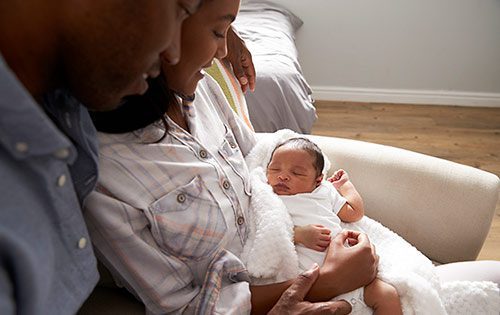
Give Yourself Some Grace
When you bring your adopted newborn home, there will be adjustments. You will expect some adjustments, but others not so much. Remember, you’re in a transitional stage right now. No matter how much you prepare, there are always surprises.
Don’t be too hard on yourself during this significant change. Take naps, eat well, and get some exercise. Ask your partner to watch the baby so you can go for a run or a walk in the park. Becoming a parent is a big deal, so allow yourself the space you need to adjust.
Dads, you play a huge role in those early weeks too. Head over to our ultimate how-to guide for dads-to-be for tips on bonding, supporting your partner, and stepping into your new role with confidence.
Accept Offers of Help
If your family or friends offer their help, it’s because they want to make things easier. When people offer to help, accept their offer.
Whether it’s meals, shopping for you, or picking up your kids at school, say yes! You don’t need to do it all by yourself.
Having the time in those tough early months to rest, shower, and sleep can go a long way in improving your outlook. It’s incredible how hard it can be to find time to shower when you have a newborn, but those 10 minutes alone in a nice, hot shower can do wonders.
Learn About Newborn Care in Expecting 101…You’re Adopting
Valerie Trumbower, a Certified Postpartum Doula, has developed a unique course for hopeful adoptive parents, called “Expecting 101…you’re adopting!” This course offers future adoptive parents a place to learn about bonding with a baby, newborn feeding, understanding baby’s cries, infant CPR, and more.
 Valerie created “Expecting 101…you’re adopting!” with adoptive couples in mind so that they don’t have to wade through pregnancy and postpartum tips that often come with other newborn preparation classes.
Valerie’s experience with newborn care and new parent care allows adopting parents a place to arm themselves with information to help them embrace the early days with the baby they are waiting to adopt. She shares strategies to bond with the baby, what baby gear you need to have when you meet your baby, and which essentials you’ll need to buy for the first month or so until you’re sure everything is official.
In “Expecting 101…you’re adopting!,” you’ll get the basics like how to burp and swaddle as well as answers the most-asked questions, like “How do we know if our baby is getting enough to eat?” and “Should we call our pediatrician about his?” Plus, when you sign up for this course, you have access for two years, so you can watch it now before you’re matched to learn what to expect when it comes to life with a newborn. And then, you can re-watch sections when your baby arrives and you have questions or need a bit of a refresher!
You’ve waited for months or maybe even years for your sweet baby to come home. As you begin your new life as a parent, there are bound to be adjustments. But, remember, you’re not alone. So take a moment today to prepare for more than just the paperwork and process to GET to your adoption dream by signing up for Expecting 101…you’re adopting. Plus, you can use coupon code LIFETIME to get $50 off your course fee!
Editor’s Note: This article was originally published on November 17, 2021, and has since been updated.
Founder of Lifetime Adoption, adoptive mom, adoption expert, and Certified Open Adoption Practitioner (C.O.A.P).
Since 1986, adoption expert Mardie Caldwell has been dedicated to bringing couples and birth parents together in order to fulfill their dreams.
“Many years ago, I was also searching for a child to adopt. We didn’t know where or how to get started. Through research, determination, and a prayer, our dream of a family became reality. I started with a plan, a notebook, assistance from a caring adoption consultant and a lot of hard work; this was my family I was building. We had a few heartaches along the way, but the pain of not having children was worse!
Within weeks we had three different birth mothers choose us. We were overwhelmed and delighted. Many unsettling events would take place before our adoption would be finalized, many months later. Little did I know that God was training and aligning me for the adoption work I now do today. It is my goal to share with our families the methods and plans which succeed and do not succeed. I believe adoption should be affordable and can be a wonderful “pregnancy” for the adoptive couple.
I have also been on both sides of infertility with the loss of seven pregnancies and then conceiving by new technology, giving birth to a healthy daughter. I have experienced first-hand the emotional pain of infertility and believe my experience allows me to serve your needs better.
It is my hope that for you, the prospective parents, your desire for a child will be fulfilled soon.”


0 Comments