
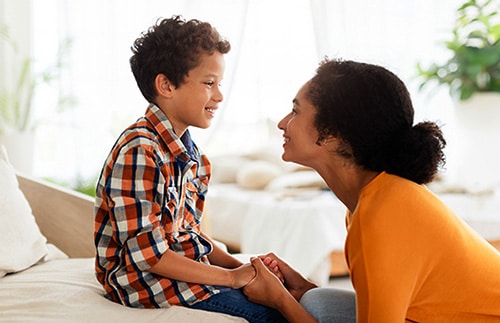
 Adopting a baby when you already have children at home is a big step for your entire family. Beyond the paperwork and the wait, one of the most important parts of the journey is learning how to explain adoption to your biological child in a way that helps them feel secure, included, and excited about becoming a big brother or sister.
Every child processes big family news differently depending on their age and personality, but the goal is always the same: honesty, warmth, and involvement. Here’s how to guide the conversation at every stage.
Why How You Explain Adoption Matters
The way you introduce adoption to your biological child sets the tone for how they’ll understand and talk about their family for years to come. Children take their emotional cues from their parents. If you approach adoption with confidence and love, your child will mirror that same openness.
Talk About How Families Can Look Different
Begin the discussion of adoption by explaining that families come in all shapes and sizes. Some families have lots of kids, some have just one or two. Some families have a mom or a dad or both, and many include grandparents living close by. Some families grow through adoption.
Explain that adoption means welcoming a child into your family to grow up as your own. If the child you’re adopting is of another race, talk with your kids about how families can look different from one another. There’s a good chance they already know a family built this way. Ask what they know and let their questions guide the conversation.
Prepare them for the possibility that others may ask why their new sibling has different skin, hair, or eye color than they do, and give them simple, confident language to answer with. Reassure your children that your love doesn’t divide when a new sibling joins the family; it grows. A parent’s heart has room for every child, biological or adopted, without taking anything away from the children already there.
What to Say at Each Age
Children process the idea of a new, adopted sibling differently depending on their developmental stage. Here’s how to adjust the conversation:
Toddlers and preschoolers (ages 2–4)
Keep it simple and concrete. Young children understand “baby” and “family” far better than the word “adoption” itself.
Try: “We’re going to have a new baby join our family. The baby needs a mommy and daddy, and we get to be that family. You get to be a big sister!”
Expect the same handful of questions on repeat, such as ”where’s the baby now” or “when will the baby get here?” Answer them the same simple way each time. Repetition helps this age group feel secure.
School-age children (ages 5–9)
Kids this age can grasp more of the “why.” Explain that some parents aren’t able to take care of a baby the way they want to, and that adoption is a loving plan that gives the baby a family.
Be ready for direct questions about the birth parents. Kids this age are naturally curious and may ask if the birth mom is sad, or if she loves the baby. Answer honestly and simply: birth parents love their child very much, and adoption is how they made sure their baby would be cared for.
Tweens and teens (10+)
Older children can handle (and often want) more detail, including some of the practical and legal steps involved. They may also have more complex emotional reactions, from excitement to worry about how the family dynamic will change.
Give them space to ask hard questions, and don’t be afraid to say “I don’t know yet” about details that are genuinely still unknown, like timing.
Get Your Kids Involved
As you prepare to welcome a baby into your home through adoption, involve your kids in the process. Ask for their ideas on the baby’s room décor. Take them shopping for toys and clothing, and let them pick out a matching outfit for themselves and the baby.
Involving them in these small decisions helps them adjust to their new role as a big brother or sister. It also lets them feel the same excitement you do.
Read Books About Adoption Together
There are many fiction and non-fiction books about adoption for kids written specifically to open this conversation. Read them together and talk through your child’s questions afterward. Books catch the odd assumptions kids sometimes form about adoption before those ideas take root, and they give your child real examples of what having an adopted sibling looks like. Reading together also builds closeness as a family while you all look forward to the adoption.
Be Honest About the Changes Ahead
As you prepare your kids for the adoption, don’t sugarcoat what’s ahead. A new baby brings real adjustments, like sharing toys, sharing your time and attention, and a new daily routine for everyone. Let your children know it’s okay to feel irritated with a new sibling sometimes; that’s part of learning to be a family, and families work things out together. Remind them they can always come to you with questions or feelings that are bothering them.
If you’re adopting an older child, explain that this child may feel afraid or unsure at first, and that any behavior struggles usually come from adjusting to a big change, not from anything your other kids did. Reassure your children that you’re in charge and that, together, the whole family will help their new sibling feel safe.
Take It Slow in the Beginning
Let your kids know it will take time for everyone to adjust. Trips to see grandma or family vacations might be paused for a bit while the newest family member settles into a routine for feeding, naps, and bedtime, not because anything is wrong, but because a steady routine helps a newly placed child feel secure. Give your biological kids space to express any frustration about the slower pace, and keep checking in with them.
Every child in your family will take their emotional cues from you. If you stay calm, honest, and loving throughout the process, your children will follow that same lead. There will be harder days along the way, but when every child in the family knows they’re loved equally and treated fairly, the good days will far outweigh the difficult ones.
Every family’s adoption journey and every child’s reaction to it differs. These tips are general guidance. If your child is struggling to adjust, a family counselor or your adoption professional can offer support tailored to your specific situation.
Frequently Asked Questions
When should I tell my biological child we’re adopting?
As early in the process as your child can understand the concept of a new baby joining the family. For most kids, that’s as soon as you’re comfortable sharing the news, using age-appropriate language. Waiting until placement is close can leave a child feeling blindsided rather than included.
How do I explain adoption to a toddler?
Keep the language simple and concrete: focus on “baby” and “family” rather than the mechanics of adoption itself. Expect to repeat the same explanation several times, since repetition helps toddlers feel secure about a big change.
Will my biological child feel jealous of their adopted sibling?
It’s a normal reaction, and being honest about it in advance helps. Involve your child in preparing for the baby, acknowledge that sharing attention is an adjustment, and reassure them often that your love for them hasn’t changed.
Should I wait until the adoption is finalized to tell my other kids?
Most families find it easier to bring children into the process early, in age-appropriate terms, rather than waiting for finalization. Telling them early gives them time to ask questions and feel like part of the journey instead of receiving sudden news.
Editor’s Note: This article was originally published on January 13, 2021, and has since been updated.
Founder of Lifetime Adoption, adoptive mom, adoption expert, and Certified Open Adoption Practitioner (C.O.A.P).
Since 1986, adoption expert Mardie Caldwell has been dedicated to bringing couples and birth parents together in order to fulfill their dreams.
“Many years ago, I was also searching for a child to adopt. We didn’t know where or how to get started. Through research, determination, and a prayer, our dream of a family became reality. I started with a plan, a notebook, assistance from a caring adoption consultant and a lot of hard work; this was my family I was building. We had a few heartaches along the way, but the pain of not having children was worse!
Within weeks we had three different birth mothers choose us. We were overwhelmed and delighted. Many unsettling events would take place before our adoption would be finalized, many months later. Little did I know that God was training and aligning me for the adoption work I now do today. It is my goal to share with our families the methods and plans which succeed and do not succeed. I believe adoption should be affordable and can be a wonderful “pregnancy” for the adoptive couple.
I have also been on both sides of infertility with the loss of seven pregnancies and then conceiving by new technology, giving birth to a healthy daughter. I have experienced first-hand the emotional pain of infertility and believe my experience allows me to serve your needs better.
It is my hope that for you, the prospective parents, your desire for a child will be fulfilled soon.”


0 Comments